Ministerio
Overview
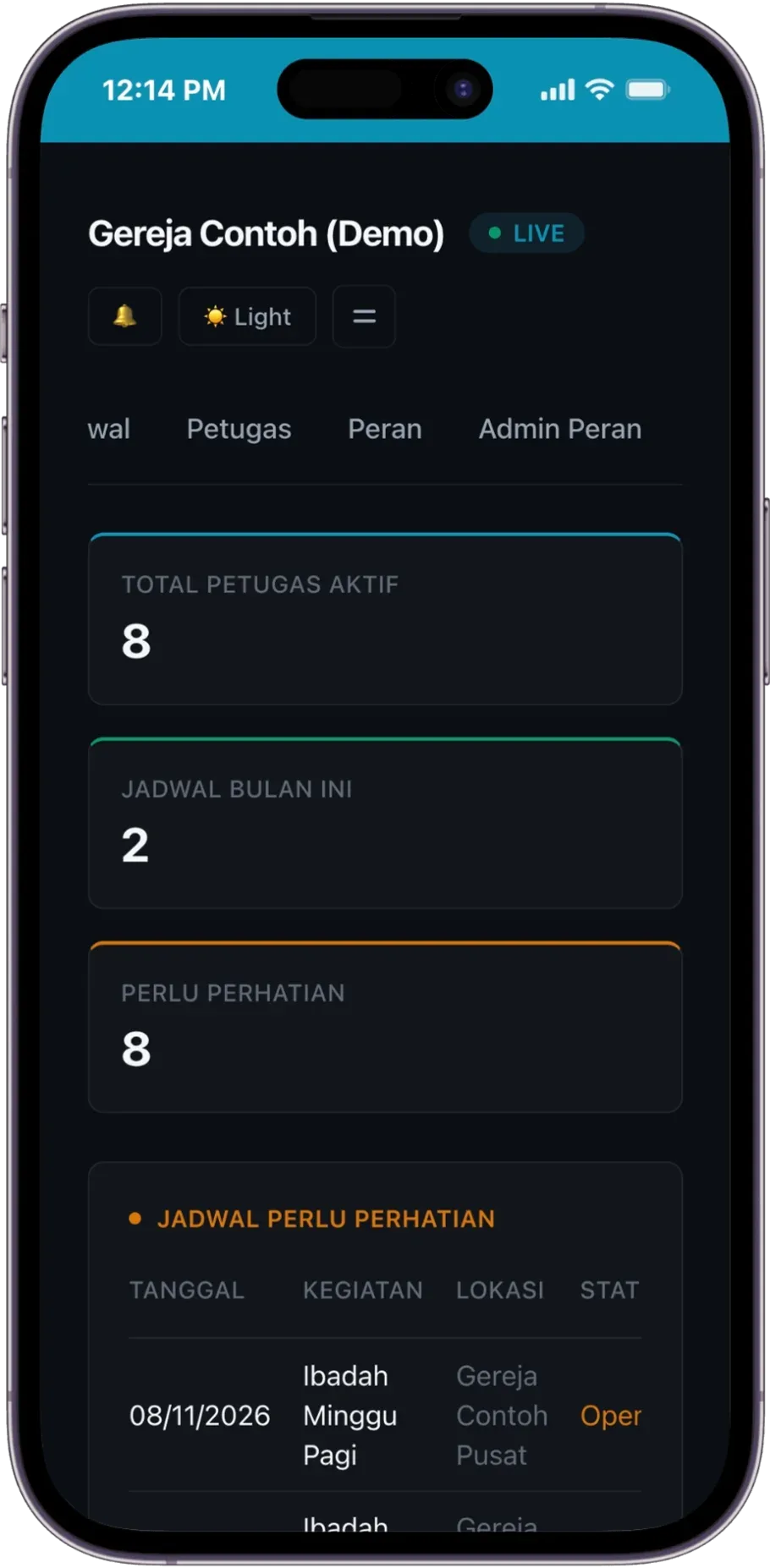
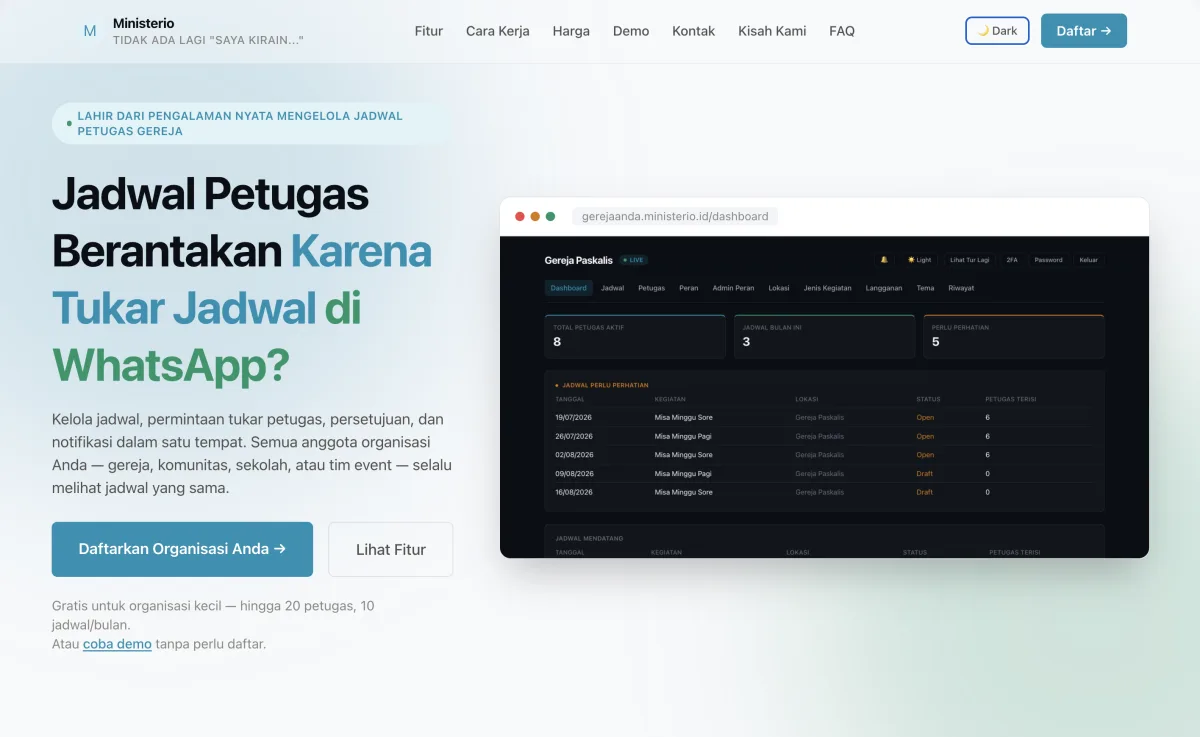
Ministerio is a duty schedule management app for organizations that run on volunteers, like churches and community groups. Each organization gets its own space to build schedules, assign people, and keep everyone informed.
The Problem
Most volunteer schedules live in a spreadsheet or a group chat. Someone makes the list, someone else screenshots it, and by the weekend half the people have forgotten their shift. The one who made the schedule ends up chasing people one by one.
Core Concept
There are three kinds of users:
Owner manages the organization, its plan, and its billing.
Admin builds the schedules and assigns people to duties.
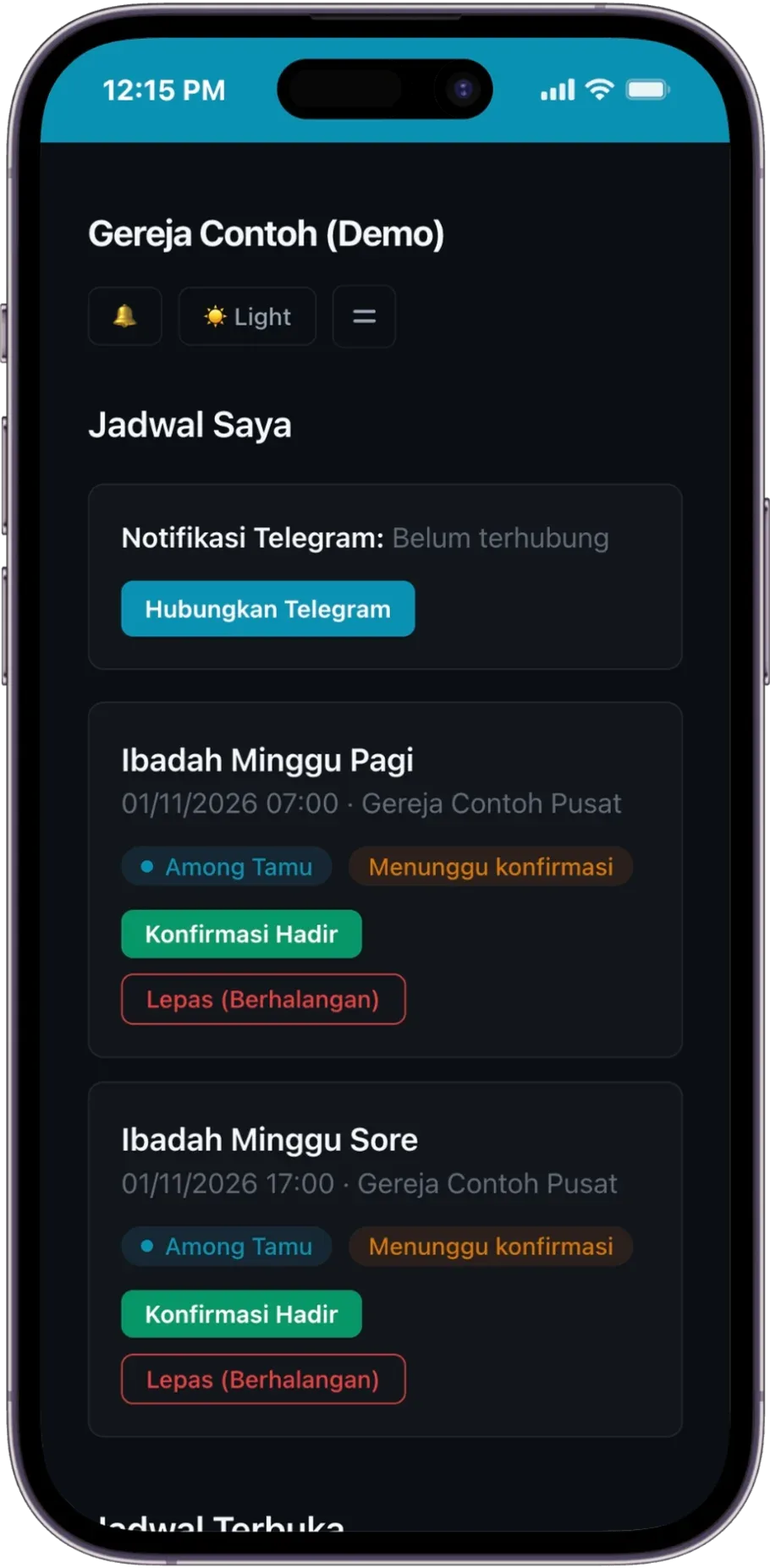
Petugas (the volunteers) log in to see their own shifts, set when they’re available, and confirm their assignments.
How It Works
An organization signs up and gets its own space.
The admin creates a schedule and assigns petugas to each duty.
Petugas get notified and confirm, or say they can’t make it.
The schedule can be exported as a PDF for those who prefer paper.
One Detail I Like: Separate Space Per Organization
Every organization is a tenant with its own separate space. The central app only handles sign-up, plans, and payments. Everything about schedules stays inside the tenant, so one organization never sees another’s data.
What I Did
Designed the multi-tenant structure and the role system
Built the schedule, availability, and assignment confirmation flow
Added notifications (email and Telegram)
Built plans and billing with Xendit, including a free plan with limits
Added 2FA for the central admin, PDF export, and a PWA version
Impact
Ministerio hasn’t been used by any organization yet. It’s a product I built to solve a problem I kept noticing, and the next step is finding the first organization willing to try it.
Key Takeaways
Building multi-tenant apps with Laravel
Separating the central app from tenant data
Integrating payments and notifications into a SaaS